
When reality becomes your greatest motivation
Sometimes a single experience can completely reshape your future. Mine came just a few months after I graduated from university.
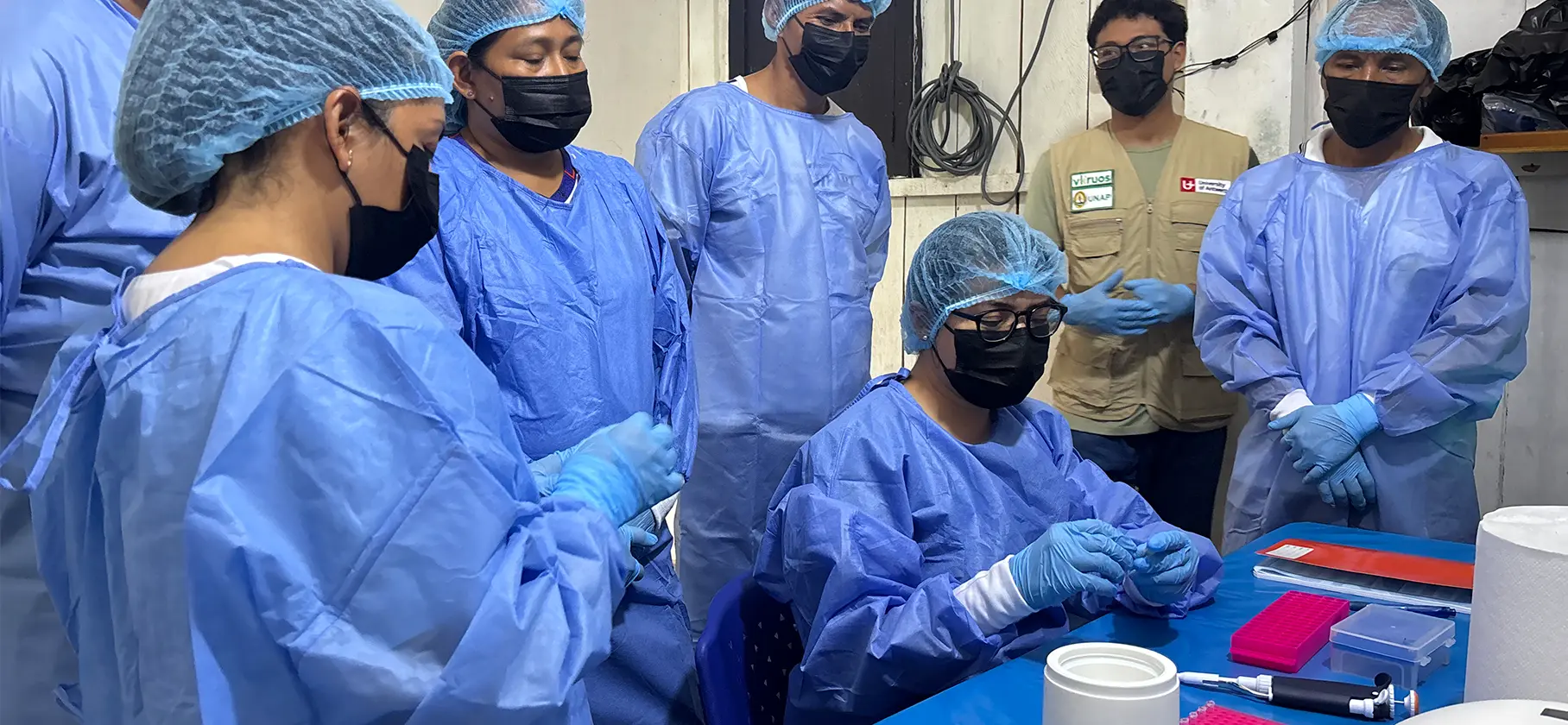
I was given the opportunity to join a malaria project to conduct epidemiological surveys across 15 remote communities in the Loreto region, along the Napo River basin in the Peruvian Amazon. The fieldwork would last just one month, but it ultimately changed the course of my career.
After a 12-hour journey, we reached the first community. As I prepared to conduct my first survey, I encountered a reality I had never experienced. There was no health post. Children were visibly pale, and families were large. The first household I visited had ten family members gathered around a single meal. Despite living with so little, they welcomed me into their home with warmth.
When I finished the interview and stepped outside, I remember feeling a lump in my throat. Conducting a survey is far more than collecting data. It allows you to connect with people on a human level. You become a listener to their stories, struggles, and hopes. You witness the daily challenges they face and feel powerless in the face of poverty and limited government presence that shape their lives.
Every household I visited seemed to tell the same story, or an even more difficult one.
During that month in the field, I told myself I wanted to help improve the health of people living in these remote communities. I knew I could not change the healthcare system overnight, but I believed I could help identify tools and solutions that could make a meaningful difference. That experience inspired me to pursue graduate studies in Epidemiology. Over time, as my interests evolved, I realised I wanted to study abroad, not simply to earn another degree, but to learn from diverse health systems, research approaches, and successful experiences that could one day be adapted to the Amazonian context.
Conducting a survey is far more than collecting data. It allows you to connect with people on a human level.
A new journey: learning to give back
Four years after that first life-changing experience, I received one of the greatest opportunities of my academic career: a VLIR-UOS scholarship to study for a Master’s degree in Epidemiology.
Those two years were intellectually demanding, but they also helped shape the researcher I wanted to become. MEPI strengthened my methodological skills and gave me the opportunity to define the public health questions I wanted my research to address. It also enabled me to conduct my master’s thesis back home in Peru, this time in another Amazonian region: Amazonas.
Although the communities in Amazonas share many similarities with those in Loreto, Indigenous cultures are even more deeply rooted. Many women speak only their native language, while their husbands often serve as a bridge to Spanish. Access to healthcare and education remains limited, and government presence is often minimal.
It was there that I encountered another reality that would reshape my understanding of public health. Local healthcare professionals explained that malaria was only one part of a much larger public health challenge. HIV, Chagas disease, syphilis, and tuberculosis were also affecting these communities, including children and adolescents.
I found myself asking difficult questions. How had these diseases reached such remote populations? Why were children living with illnesses that should be preventable and treatable? What social, cultural, and structural factors allowed these inequities to persist?
Those questions transformed my understanding of epidemiological and public health research.
Looking beyond the numbers
Until then, I had viewed epidemiology primarily through a quantitative lens, focusing on statistical models, regression analyses, and odds ratios. It was there that I came to understand the value of qualitative research.
Numbers can tell us what is happening, but qualitative methods can explain why.
Listening to communities and understanding their beliefs, behaviours, perceptions, and daily realities became as important as analysing epidemiological data. Fortunately, for my master’s thesis, I had the opportunity to integrate both perspectives by conducting a mixed-methods study on malaria, combining quantitative and qualitative approaches.
For me, the true strength of research lies not simply in producing evidence but in generating knowledge that reflects the realities of the communities we work with.
Completing and successfully defending that thesis was more than an academic achievement. It confirmed that interdisciplinary research has the power to answer questions that numbers alone cannot.
The true strength of research lies not simply in producing evidence but in generating knowledge that reflects the realities of the communities we work with.
Bringing knowledge back home
The knowledge and skills I gained during my master’s training were never meant to stay confined to the classroom. From the very beginning, I knew I had to return to the place that inspired my journey: Loreto, my home.
Today, I have the privilege of conducting my PhD research through a sandwich doctoral programme at the University of Antwerp. This model enables me to design, coordinate, and implement my research directly in Loreto while benefiting from international academic collaboration.
Thanks to the institutional partnership between the University of Antwerp and the Universidad Nacional de la Amazonía Peruana, my doctoral work has enabled me not only to expand collaborative research networks but also to identify strategic partners who strengthen and complement our work in the region.
Perhaps the most rewarding part of this journey is witnessing how education can create a ripple effect. I see its impact in the remote communities where our research helps improve malaria diagnosis and surveillance. I see it in the local health professionals with whom we collaborate. And I see it in a new generation of young researchers eager to improve their own region through science.
Looking back, it is remarkable to realise that everything began during that month of fieldwork in 2016.
A journey that began with a single survey in a remote Amazonian community has grown into a lifelong commitment: using research not only to understand public health challenges but also to help create solutions for the communities that inspired me to become a scientist in the first place.
A journey that began with a single survey in a remote Amazonian community has grown into a lifelong commitment.
Let’s stay connected
If you’d like to connect or learn more about my research, you can reach me through:
- LinkedIn:
-
Susan Cilene Paredes Fernandez
- Research profile / ORCID:
-
0000-0002-5278-1975
Leave a Reply