
The moment it clicked
Last summer, I wrote a motivational letter for a job application that began like this:
“When I got ready this morning, I noticed something on my skin. As a final-year medicine and epidemiology student, I was pokken- en mazelenwijs about scientific research and infectious disease control.”
The Dutch expression pokken- en mazelenwijs, literally meaning pox and measles, is used to describe someone who is very well versed in a topic. I thought it was a good eye-catcher, especially since I was applying for a position as a clinical trial physician at a vaccine trial centre.
The joke must have stuck, because I can now celebrate my one-year anniversary at Vaccinopolis, the Centre for Vaccines at the University of Antwerp.
From curative medicine to prevention
I started my MEPI track after taking a break from my Master of Medicine during COVID. The sense of powerlessness I felt on the curative side of medicine made me pause the bachelor-master-residency trajectory I had been following. The pandemic made me search for the skills to look at a health problem from a bird’s-eye view and find ways to repair the system so that fewer people would have to face that health problem in the first place.
As my grandmother says:
If you prevent it, you won’t have to cure it.
I ended up combining both master’s programmes and completed my Master’s in Medicine first. I found the opening at the university through a repost by one of my MEPI friends, another physician who had made a COVID-MD-to-MPH career pivot.
It showed me how valuable the MEPI network can be even before graduation.
Asking the health question
What I do now as a physician in clinical trial work is difficult to compare with the day-to-day work of a curative healthcare professional. People don’t come to me with a health question. I pose the health question.
People don’t come to me with a health question. I pose the health question.
Explain. Stat!
My experience in MEPI has been immensely helpful for this work. Calculating sample sizes and understanding the methodological analyses used to support or reject a hypothesis have been indispensable.
One problem we often encounter, whether writing or reading a methods section, is that too few people properly understand statistics. As a result, too few people can explain statistics clearly, and the problem comes full circle.
So, no matter how difficult that methods course feels, you are creating job opportunities for yourself by completing it.
Comments noted
A second lesson the Master of Epidemiology taught me was to check my work, particularly through the peer-review classes on protocol writing. These classes made me painfully aware of how others interpreted something I thought I had written perfectly clearly.
When testing a new drug or vaccine and working with volunteers, everything must be documented clearly and in accordance with protocol. Files are often kept for years after a trial has concluded. If you write something unclear or incorrect, someone will eventually pick it up.
See one, do one, teach one
Combining clinical medicine with public health research gives you a different perspective and encourages you to think critically about both the practical and theoretical aspects of vaccination programmes.
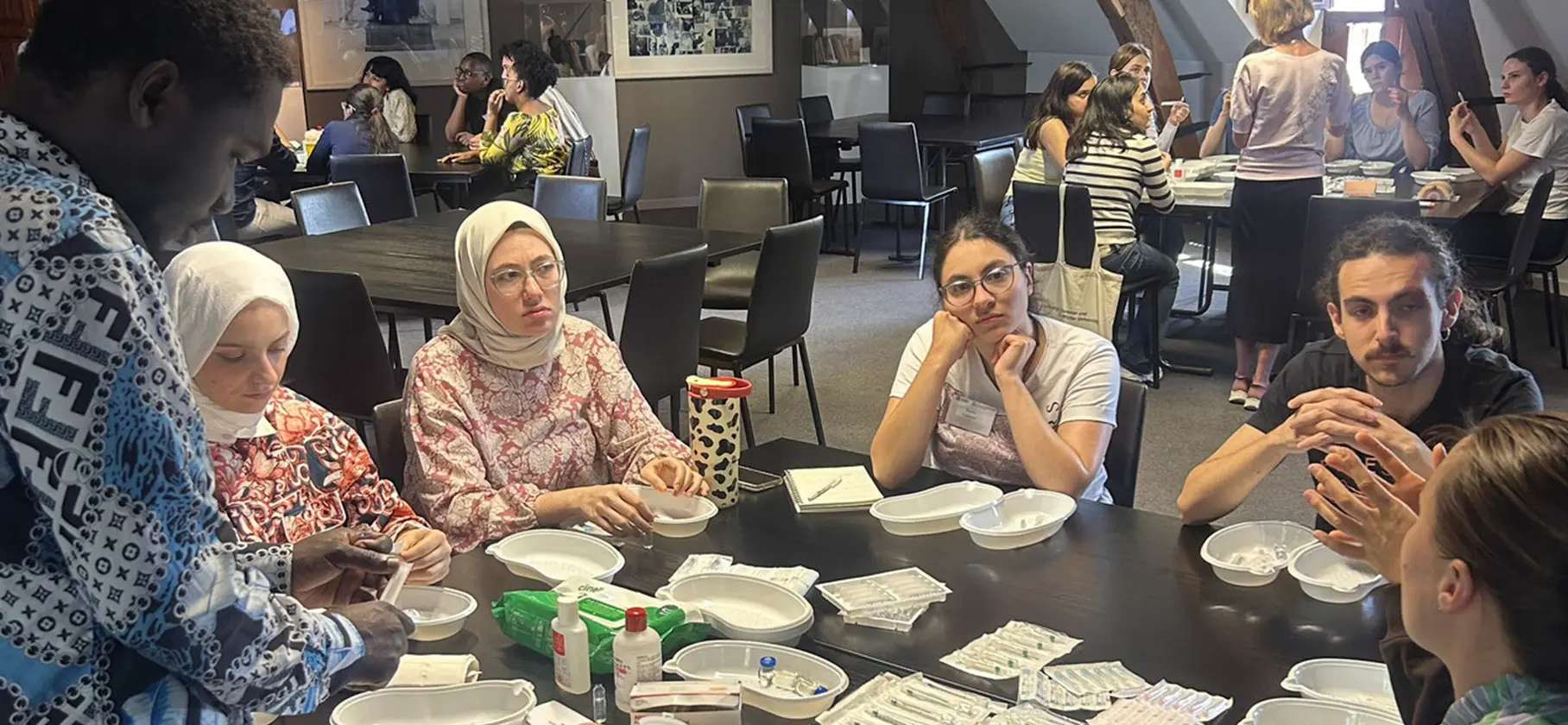
Two months ago, I had the opportunity to teach vaccination training to students at the Vaccinology Summer School in Antwerp. Most participants came from life sciences master’s programmes. Pharmaceutical and medical students were particularly interested in vaccination techniques.
They came from countries with very different endemic disease profiles and asked questions about vaccine preparation and how vaccines work. I was surprised by how many of those questions I could answer after only a year immersed in the field. There are still many misconceptions and a great deal of misinformation surrounding vaccines and vaccine research, often because of a lack of accessible information. As a public health community, we are well placed to help address this.
Moving the needle
Working in prevention is more of a slow burn than the direct dopamine hit you get when something goes right in curative medicine. It can take years for a vaccine to reach the market, or for an evaluation of a vaccination campaign to show the fruits of your labour.
But every second, the clock’s needle also moves. Better understanding the inner mechanisms of that clock only amplifies the joy of seeing progress.
So, I would like to leave you with this:
Use your skills to explain clearly, comment honestly, and teach each other freely, so that together we can move the needle.
And if you are a physician or nurse with a Dutch-language certificate and a diploma recognized in Belgium, consider joining us at Vaccinopolis.
P.S. I would like to thank Liesbeth Van Gestel for reposting the job opening that helped me find this opportunity.
Let’s stay connected
If you’d like to connect or learn more about my research, you can reach me through:
- LinkedIn:
Leave a Reply